Hantavirus is a rare but serious viral infection carried by rodents. While cases in India are not common, knowing the symptoms, risks, and ways to prevent it is essential. Residents of Chennai, especially those in areas with rodent problems, should understand how hantavirus spreads, the early signs, and how to protect themselves. This guide provides all the necessary information, from diagnosis to local precautions.
What is Hantavirus?
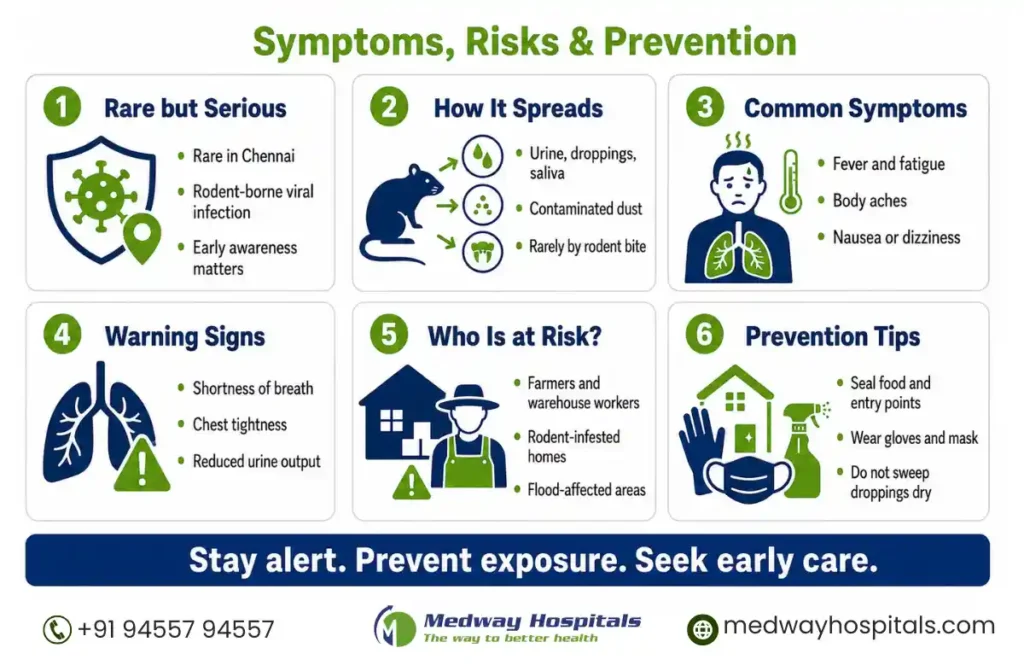
Hantavirus belongs to a group of viruses mainly found in rodents. Humans typically get the virus through contact with infected rodent urine, droppings, or saliva, or by inhaling contaminated dust. In severe cases, the virus can lead to Hantavirus Pulmonary Syndrome (HPS), which affects the lungs, or Hemorrhagic Fever with Renal Syndrome (HFRS), which impacts the kidneys. Symptoms can vary from mild fever and fatigue to severe respiratory issues.
Key points:
- Transmitted through rodents, not from person to person.
- Symptoms usually appear 1 to 5 weeks after exposure.
- Early detection greatly improves the chances of recovery.
Is Hantavirus Common in Chennai?
Hantavirus cases are rare in India, but occasional infections have been reported. Chennai’s urban environment can attract rodents, raising the chances of exposure, especially in older buildings or markets. Awareness and preventive measures are vital, so there’s no need for panic.
Factors that increase local risk:
- Poor sanitation and waste management.
- Storing food in areas accessible to rodents.
- Presence of rodent nests in homes or businesses.
Tips for Chennai residents:
- Keep your surroundings clean.
- Avoid areas with visible rodent infestations.
- Teach family members about rodent-borne infections.
Symptoms to Watch For
Hantavirus symptoms can resemble those of the flu or other common viral infections, making early recognition difficult. Watch for these key warning signs:
Early Symptoms:
- Fever and chills
- Fatigue
- Muscle aches, especially in the back, thighs, or shoulders
- Headache and dizziness
Advanced Symptoms:
- Shortness of breath
- Cough that produces fluid or blood
- Low blood pressure and kidney problems
- Gastrointestinal issues like nausea, vomiting, and abdominal pain
Action tip: If you develop flu-like symptoms after potential rodent exposure, seek medical help right away. Early treatment can reduce complications.
Early Warning Signs to Watch For
Recognizing early signs is vital to prevent complications.
Look for:
- Persistent fever without another cause
- Severe fatigue that limits daily activities
- Mild breathing difficulties, especially during exertion
- Swelling around the eyes or limbs due to fluid buildup
- Abdominal pain or nausea after rodent exposure
Tip: Keep a log of any unusual symptoms if you suspect exposure. Share this information with your doctor for quicker diagnosis.
Causes and Transmission
Hantavirus mainly spreads through:
- Rodent urine and droppings: Handling contaminated surfaces or inhaling dust from dried droppings.
- Bites from infected rodents: This is less common but possible.
- Indirect contact: Through contaminated food or water sources.
Preventive tips:
- Avoid handling rodents directly.
- Wear masks and gloves while cleaning rodent-infested areas.
- Seal any gaps and cracks in your home to keep rodents out.
Risk Factors and who is Most Vulnerable
Some groups in Chennai may be at higher risk:
- People living in areas prone to rodents.
- Those working in warehouses, farms, or markets.
- Individuals with weakened immune systems.
- Families with unsecured food storage.
Understanding these risk factors helps prioritize preventive steps, especially for children and elderly family members.
How Hantavirus Affects the Lungs and Body
Hantavirus can develop into Hantavirus Pulmonary Syndrome (HPS), which impacts the lungs:
- Fluid builds up in the alveoli, leading to breathing difficulties.
- Rapid heart rate and low oxygen levels may occur.
- Kidney function can decline in some cases (HFRS).
Medical note: Hospitalization and supportive care, such as oxygen therapy and intravenous fluids, are crucial for severe cases.
Diagnosis and Medical Tests
Getting an accurate diagnosis includes:
- Blood tests to find hantavirus antibodies.
- PCR tests to detect viral RNA.
- Imaging, such as chest X-rays, for lung involvement.
- Kidney function tests if urinary symptoms arise.
Tip: Early testing can lessen complications. Share your exposure history with your doctor to guide the testing process.
Available Treatment and Supportive Care
Currently, there is no specific antiviral treatment for hantavirus. Care focuses on:
- Hospitalization and close monitoring for severe cases.
- Oxygen therapy for breathing issues.
- Managing fluids for kidney problems.
- Relief from symptoms like fever, pain, and nausea.
Medical advice: Early care increases survival rates. Avoid treating yourself at home for severe symptoms.
Prevention Tips for Chennai Residents
Taking preventive steps can lower the risk of exposure:
- Control rodents: Seal entry points, set traps, and keep the area clean.
- Store food safely: Use rodent-proof containers.
- Wear protective gear: Use masks and gloves when cleaning rodent areas.
- Raise public awareness: Teach family and neighbors about signs and risks.
Safe Cleaning Methods for Rodent-Infested Areas
When cleaning areas with droppings or urine:
- Ensure good ventilation.
- Spray disinfectant or bleach on droppings before cleaning.
- Use gloves and masks.
- Dispose of waste in sealed bags.
- Wash your hands thoroughly afterward.
When to See a Doctor
Seek immediate medical attention if:
- You experience fever and respiratory symptoms after rodent exposure.
- Shortness of breath worsens quickly.
- You notice unusual bleeding, swelling, or kidney problems.
Early intervention can prevent the disease from progressing.
Hantavirus vs Dengue / COVID
While some symptoms overlap with dengue and COVID, the differences include:
| Feature | Hantavirus | Dengue | COVID-19 |
|---|---|---|---|
| Transmission | Rodents | Mosquitoes | Human-to-human |
| Early Symptoms | Fever, muscle aches | Fever, rash | Fever, cough, fatigue |
| Respiratory Issues | Pulmonary distress | Rare | Common |
| Prevention | Rodent control | Mosquito control | Masks, distancing |
Myths vs Facts About Hantavirus
Myth: Hantavirus spreads from person to person.
Fact: It is spread through rodents; human transmission is extremely rare.
Myth: Only rural areas are at risk.
Fact: Urban rodent infestations also present a risk.
Myth: Vaccines for hantavirus are widely available.
Fact: No approved vaccine exists; prevention focuses on controlling rodents.
Conclusion
Hantavirus in Chennai is rare but can be serious. Awareness, early recognition, and preventive steps are crucial. Residents should focus on controlling rodents, safe cleaning practices, and seeking prompt medical care if symptoms arise. Consulting specialists in infectious diseases, pulmonology, or general medicine can ensure timely diagnosis and treatment, keeping you and your family safe.