“You can lose up to 100 hairs a day and still be considered normal. But when hair loss starts appearing on your pillow, shower drain, and hairbrush every day, your body may be trying to tell you something.”
Hair growth is influenced by much more than genetics. Nutrition, hormonal balance, scalp health, stress levels, sleep quality, medical conditions, and lifestyle habits all play important roles in determining the strength and density of your hair.
Many people focus primarily on shampoos, oils, and cosmetic treatments. While these products may improve the appearance of hair temporarily, healthy hair growth begins beneath the scalp. Hair follicles require a continuous supply of proteins, vitamins, minerals, and healthy fats to remain active and productive.
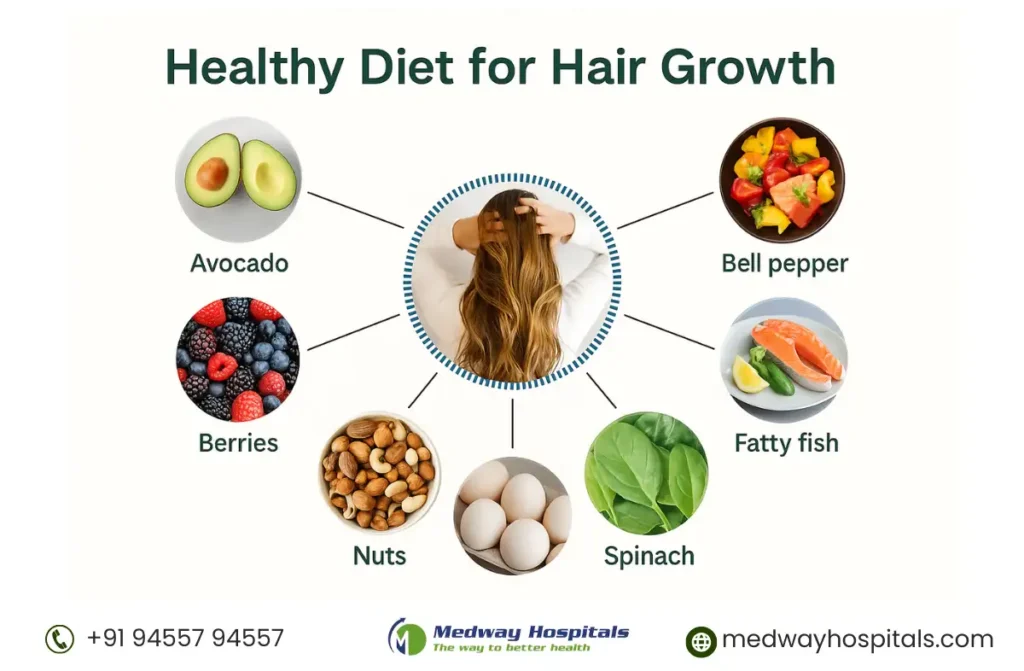
Hair follicles are among the fastest-growing cells in the human body. Because they require significant energy and nutrients, they are often among the first tissues to show signs of nutritional deficiencies, hormonal imbalances, chronic stress, or underlying health problems. As a result, symptoms such as excessive shedding, thinning hair, brittle strands, slow growth, widening hair partitions, or visible scalp may develop.
A healthy diet for hair growth should include adequate protein, iron, zinc, omega-3 fatty acids, vitamin D, biotin, vitamin B12, folate, and antioxidant-rich fruits and vegetables. Combined with proper scalp care and medical evaluation when necessary, good nutrition can significantly improve long-term hair health.
Hair Loss at a Glance
| Fact | Details |
| Normal daily hair shedding | 50–100 hairs |
| Hair growth rate | Approximately 1–1.5 cm per month |
| Main protein in hair | Keratin |
| Adults experiencing noticeable hair loss | Up to 50% during their lifetime |
| Most common nutritional cause of hair loss | Iron deficiency |
| Time required to see improvement | Usually 3–6 months |
Why Nutrition Matters for Hair Growth
Hair is composed primarily of keratin, a structural protein. To produce healthy hair, follicles require a constant supply of amino acids, vitamins, minerals, oxygen, and energy. Poor dietary habits, restrictive diets, rapid weight loss, and nutrient deficiencies can disrupt this process and weaken hair follicles.
The Hair Follicle is One of the Fastest-Growing Structures in the Body
Hair follicles continuously cycle through phases of growth, transition, and shedding. Because these cells divide rapidly, they depend heavily on proper nutrition. When the body experiences nutrient shortages, hair growth often slows as nutrients are redirected toward more essential organs.
Hair growth occurs in three stages:
• Anagen (Growth Phase) – Active growth period lasting several years
• Catagen (Transition Phase) – Short period where growth slows
• Telogen (Resting Phase) – Hair sheds and makes way for new growth
Nutritional deficiencies can shorten the anagen phase and increase the number of follicles entering the telogen phase, leading to excessive shedding and thinning.
Key nutritional factors associated with healthy hair growth include:
• Protein
• Iron
• Vitamin D
• Zinc
• Biotin
• Omega-3 fatty acids
• Selenium
• Vitamin B12
• Folate
People who frequently skip meals, follow crash diets, consume excessive processed foods, or eat insufficient protein may notice gradual thinning over time.
Did You Know?
- Hair is the second fastest-growing tissue in the human body after bone marrow.
- The average scalp contains approximately 100,000 hair follicles.
- A single strand of hair can support up to 100 grams of weight.
- Stress-related hair loss may appear 2–3 months after a stressful event.
Best Foods for Healthy Hair Growth
Certain foods provide the essential nutrients required for stronger hair roots, healthier scalp function, and improved follicle activity.
| Nutrient | Why It Matters | Best Food Sources |
|---|---|---|
| Protein | Builds keratin | Eggs, fish, chicken, lentils |
| Iron | Delivers oxygen to follicles | Spinach, dates, red meat |
| Omega-3 | Supports scalp health | Salmon, walnuts, flaxseeds |
| Zinc | Repairs follicles | Pumpkin seeds, seafood |
| Biotin | Supports keratin production | Eggs, nuts, seeds |
| Vitamin C | Helps collagen formation | Amla, oranges, guava |
| Vitamin D | Regulates follicle cycling | Sunlight, eggs, fish |
Protein-Rich Foods
Protein is the foundation of healthy hair. Inadequate protein intake may result in slower growth, weaker strands, and increased shedding.
Excellent protein sources include:
• Eggs
• Fish
• Chicken
• Greek yogurt
• Paneer
• Lentils
• Chickpeas
• Soy products
• Nuts and seeds
Eggs deserve special attention because they provide both protein and biotin, two nutrients closely linked to hair strength.
Iron-Rich Foods for Hair Strength
Iron deficiency remains one of the most common causes of hair loss worldwide, especially among women.
Iron-rich foods include:
• Spinach
• Lentils
• Dates
• Lean red meat
• Liver
• Beans
• Pumpkin seeds
• Beetroot
For improved absorption, combine iron-rich foods with vitamin C-rich foods such as amla, oranges, guava, or tomatoes.
Best Indian Foods for Hair Growth
| Food | Key Hair Nutrients |
|---|---|
| Amla | Vitamin C, antioxidants |
| Curry leaves | Iron, antioxidants |
| Moringa leaves | Iron, calcium, vitamins |
| Ragi | Iron, amino acids |
| Paneer | Protein |
| Moong dal | Protein, folate |
| Groundnuts | Biotin, healthy fats |
| Sesame seeds | Zinc, iron |
These traditional foods can easily be incorporated into everyday Indian meals and provide valuable nutrients that support hair growth naturally.
Vitamin Deficiencies that Cause Hair Fall
Nutritional deficiencies are among the most overlooked causes of hair loss. Identifying and correcting deficiencies often improves hair quality significantly.
| Deficiency | Common Symptoms | Hair Impact |
|---|---|---|
| Iron | Fatigue, pale skin | Excess shedding |
| Vitamin D | Bone pain, weakness | Diffuse thinning |
| Zinc | Slow healing, low immunity | Weak roots |
| Vitamin B12 | Fatigue, numbness | Thinning and premature greying |
| Protein | Muscle loss, weakness | Reduced growth and breakage |
Hormonal Causes of Hair Fall
Hormones play a critical role in regulating the hair growth cycle. When hormonal levels fluctuate or become imbalanced, hair follicles may shrink, growth phases may shorten, and shedding can increase significantly.
In many cases, nutritional improvements alone may not completely resolve hair loss if an underlying hormonal condition is present.
Common Hormonal Causes of Hair Loss
| Condition | Typical Hair Loss Pattern | Associated Symptoms |
|---|---|---|
| PCOS | Crown thinning | Acne, irregular periods, weight gain |
| Hypothyroidism | Diffuse thinning | Fatigue, dry skin, weight gain |
| Hyperthyroidism | Excess shedding | Anxiety, palpitations, weight loss |
| Postpartum Hormonal Changes | Temporary shedding | Occurs 3–6 months after childbirth |
| Menopause | Reduced hair density | Hormonal fluctuations, hot flashes |
Thyroid Disorders and Hair Loss
The thyroid gland regulates metabolism throughout the body, including the activity of hair follicles. Both underactive and overactive thyroid conditions can disrupt normal hair growth.
Symptoms may include:
• Diffuse hair thinning
• Dry, coarse hair
• Eyebrow thinning
• Fatigue
• Weight changes
• Sensitivity to temperature
Hair growth often improves once thyroid hormone levels are properly managed through medical treatment.
PCOS and Hair Fall
Polycystic Ovary Syndrome (PCOS) is one of the leading hormonal causes of hair loss in women.
Elevated androgen levels can cause hair follicles on the scalp to shrink gradually, resulting in:
• Thinning around the crown
• Widening hair partition
• Reduced hair density
• Excessive shedding
Women with PCOS may also experience:
• Irregular menstrual cycles
• Acne
• Weight gain
• Excess facial or body hair
Managing PCOS-related hair loss often requires a combination of nutritional support, weight management, hormonal therapy, and medical supervision.
Postpartum Hair Loss
During pregnancy, elevated hormone levels keep many hairs in the growth phase. After childbirth, these hormone levels decline rapidly, causing a large number of hairs to enter the shedding phase simultaneously.
Postpartum hair shedding typically:
• Begins 2–4 months after delivery
• Peaks around 4–6 months
• Gradually improves within one year
Adequate nutrition, iron intake, hydration, sleep, and stress management support recovery.
Hair Growth Timeline
| Time | What You May Notice |
|---|---|
| 2–4 Weeks | Improved scalp health |
| 1–2 Months | Reduced shedding |
| 3–4 Months | Stronger strands |
| 4–6 Months | Visible improvement in density |
| 6–12 Months | Maximum nutritional benefits |
Common Hair Loss Myths
Misinformation about hair growth is widespread. Understanding the facts can help individuals make informed decisions about their hair health.
| Myth | Reality |
|---|---|
| Oiling alone regrows hair | Nutrition and medical factors have a greater impact |
| Cutting hair makes it grow faster | Hair grows from follicles, not from the ends |
| Shampoo causes hair loss | Underlying conditions are usually responsible |
| Biotin cures all hair fall | Only beneficial when deficiency exists |
| Hair loss only affects men | Millions of women experience significant hair loss |
| Washing hair daily causes baldness | Normal washing does not damage follicles |
Hair Fall Warning Signs You Should Not Ignore
While mild seasonal shedding is common, persistent or progressive hair loss should never be ignored.
Early diagnosis often leads to better treatment outcomes and may prevent permanent follicle damage.
Important warning signs include:
• Sudden increase in hair shedding
• Visible scalp
• Widening hair partition
• Bald patches
• Hair breakage
• Itchy scalp with redness
• Thinning eyebrows
• Persistent dandruff
• Excessive shedding after illness or stress
Seek Medical Evaluation Immediately If You Notice:
• Rapid hair loss within weeks
• Patchy bald spots
• Hair loss with severe scalp inflammation
• Hair loss accompanied by significant weight changes
• Hair loss with menstrual irregularities
• Hair loss with unexplained fatigue
A dermatologist may recommend:
• Iron studies
• Complete blood count
• Thyroid function tests
• Vitamin D assessment
• Hormonal evaluation
• Scalp examination
• Trichoscopy
Medical Treatments for Hair Loss
While nutrition is essential for healthy hair growth, some individuals require medical treatment depending on the underlying cause of their hair loss.
The most effective treatment plan depends on whether hair loss is caused by genetics, nutritional deficiencies, hormonal disorders, autoimmune conditions, or scalp diseases.
Comparison of Common Hair Loss Treatments
| Treatment | Best For | Recovery | Expected Outcome |
|---|---|---|---|
| PRP Therapy | Early thinning | Minimal downtime | Improved density |
| Minoxidil | Pattern hair loss | Ongoing use | Reduced progression |
| Hormonal Therapy | PCOS-related hair loss | Variable | Hormonal regulation |
| Nutritional Therapy | Deficiency-related loss | Several months | Stronger growth |
| Hair Transplant | Advanced baldness | Several weeks | Permanent restoration |
PRP Therapy
Platelet-Rich Plasma (PRP) therapy uses concentrated growth factors obtained from the patient’s own blood.
Potential benefits include:
• Improved hair density
• Reduced shedding
• Enhanced follicle stimulation
• Increased hair thickness
Most individuals require multiple sessions for optimal results.
Medications for Hair Growth
Dermatologists may prescribe medications based on the specific diagnosis.
Common treatments include:
• Minoxidil
• Anti-androgen medications
• Nutritional supplementation
• Prescription scalp treatments
• Hormonal therapy
Self-medication should be avoided because incorrect treatment may delay proper diagnosis.
Hair Transplant Procedures
Hair transplantation may be recommended when follicles have permanently stopped producing hair.
Modern techniques can provide:
• Natural-looking hairlines
• Long-lasting results
• Improved hair density
• Minimal visible scarring
However, maintaining good nutrition and scalp health remains important even after a successful transplant.
Foods That May Worsen Hair Fall
Just as some foods support hair growth, others may negatively affect scalp health and follicle function when consumed excessively.
Limit:
• Sugary beverages
• Processed snacks
• Deep-fried foods
• Excess alcohol
• Highly processed fast foods
• Crash diets
• Extremely low-protein diets
• Excessive refined carbohydrates
Rapid weight loss and restrictive eating patterns are common triggers of temporary hair shedding.
Lifestyle Tips to Improve Hair Growth
Healthy hair depends not only on nutrition but also on everyday lifestyle habits.
Important habits include:
• Getting 7–9 hours of quality sleep
• Staying physically active
• Managing stress effectively
• Drinking adequate water
• Avoiding smoking
• Limiting excessive heat styling
• Protecting hair from environmental damage
• Using gentle hair care products
Daily Hair Health Checklist
□ Include protein in every meal
□ Drink 2–3 liters of water daily
□ Sleep adequately
□ Exercise regularly
□ Manage stress levels
□ Consume fruits and vegetables daily
□ Avoid smoking
□ Minimize excessive heat styling
□ Protect scalp from excessive sun exposure
Foods Comparison Graphic Content
Hair-Friendly Foods vs Foods That May Contribute to Hair Problems
| Choose More Often | Limit Excessively |
|---|---|
| Eggs | Sugary beverages |
| Salmon and fatty fish | Processed snacks |
| Spinach | Excess fried foods |
| Lentils and legumes | Fast food |
| Nuts and seeds | Highly refined carbohydrates |
| Amla and citrus fruits | Excess alcohol |
| Paneer and yogurt | Crash diets |
| Whole grains | Very low-protein diets |
| Avocados | Frequent sugary desserts |
| Colorful vegetables | Ultra-processed foods |
A balanced dietary pattern is generally more beneficial than focusing on a single “superfood.” Consistency is what supports long-term hair health.
When to See a Doctor for Hair Loss
Occasional hair shedding is normal. However, persistent or severe hair loss may indicate an underlying medical condition that requires professional evaluation.
Consult a healthcare professional if:
• Hair loss persists longer than 3 months
• Hair shedding becomes noticeably excessive
• Bald patches develop
• The scalp becomes visible through the hair
• Hair loss occurs suddenly
• Scalp pain, redness, or itching develops
• Hair loss is accompanied by fatigue
• Menstrual irregularities occur
• Significant weight changes occur
• There is a family history of early baldness
Potential Diagnostic Tests
| Test | Purpose |
|---|---|
| Complete Blood Count (CBC) | Evaluates anemia and overall health |
| Iron Profile | Detects iron deficiency |
| Ferritin Levels | Measures iron storage |
| Thyroid Function Tests | Assesses thyroid disorders |
| Vitamin D Test | Detects deficiency |
| Vitamin B12 Test | Evaluates nutritional status |
| Hormonal Profile | Identifies hormonal imbalances |
| Scalp Examination | Detects scalp disorders |
| Trichoscopy | Examines hair follicles in detail |
Early diagnosis often improves treatment success and may help prevent progressive hair thinning.
Expert Insight
Hair growth is a gradual biological process rather than an overnight transformation. One of the most common mistakes people make is expecting visible improvement within a few weeks of changing their diet or starting supplements.
“Hair loss is often the body’s early warning signal that something internally needs attention. Treating the root cause is usually more effective than focusing only on cosmetic solutions.”
In reality, hair follicles require time to respond to improved nutrition and treatment. Most individuals need at least 3–6 months before noticeable changes in hair density, thickness, or shedding patterns become visible.
Rather than chasing quick fixes, focus on:
• Consistent protein intake
• Correction of nutritional deficiencies
• Proper management of hormonal disorders
• Stress reduction
• Adequate sleep
• Long-term scalp care
Sustainable habits often produce better results than expensive products or short-term trends.
Conclusion
A healthy diet for hair growth is not based on a single food, vitamin, or supplement. Strong, healthy hair reflects overall health and depends on a combination of balanced nutrition, hormonal stability, scalp care, lifestyle habits, and timely medical attention when needed.
Protein, iron, zinc, vitamin D, omega-3 fatty acids, vitamin B12, and antioxidants all contribute to healthier follicles and stronger hair strands. Likewise, addressing underlying conditions such as thyroid disorders, PCOS, nutritional deficiencies, chronic stress, and scalp diseases is often essential for long-term improvement.
While shampoos, oils, and cosmetic treatments may enhance appearance temporarily, lasting hair health begins from within. Building a nutrient-rich diet, maintaining healthy daily habits, and seeking professional evaluation when symptoms persist can significantly improve hair growth and help prevent progressive hair thinning.
Healthy hair is rarely built by a miracle product. It is built meal by meal, habit by habit, and through timely attention to underlying health conditions. The sooner the cause is identified, the better the chances of preserving healthy hair growth for the future.
Read Also : Best Skin Care Hospital in Chennai